
News
MyGreenBucks Kenneth Jones: Finance Claims and Safety Checks

When people search MyGreenBucks Kenneth Jones, they are usually trying to answer one simple question: is this a real finance-related name, brand, or page that can be trusted, or is it something that needs extra caution? Because the phrase mixes what sounds like a money-focused brand name with a person’s name, it can create instant confusion. This guide explains the most common ways a term like this appears online, what “finance claims” often look like in practice, and the safest steps you can take before you click, sign up, or share personal details.
What the name may refer to
A search term like this can point to more than one thing, and that matters because your safety checks depend on what you’re dealing with. Sometimes it refers to a website or social page that shares budgeting tips, savings ideas, or side-income content under the “MyGreenBucks” label. Other times it can be a profile name, an author credit, or a page owner listed as “Kenneth Jones.” In some cases, it can also be a mix-up where search results combine two different identities, especially if the name is common or reused across platforms.
Why it shows up in finance searches
Finance-related terms spread quickly because people actively look for ways to save money, manage debt, or earn extra cash. That creates an easy path for blogs, forums, and social accounts to reuse similar branding. A name like “MyGreenBucks” naturally signals savings, cash, rewards, or personal finance. When you add “Kenneth Jones,” it can look like a founder, writer, or public-facing contact, even if it is simply a username or a copied label on another site.
What “finance claims” usually mean in plain language
Finance claims are statements that suggest you can save more, earn more, invest smarter, or get a specific result. Some claims are harmless, like “this method can help you build a budget.” Others are stronger and need careful review, like “guaranteed daily profit,” “risk-free returns,” or “instant approval for large loans.” The safest approach is to treat any big promise as a signal to slow down, verify details, and look for proof that is clear, consistent, and easy to check.
First, figure out what you are actually looking at
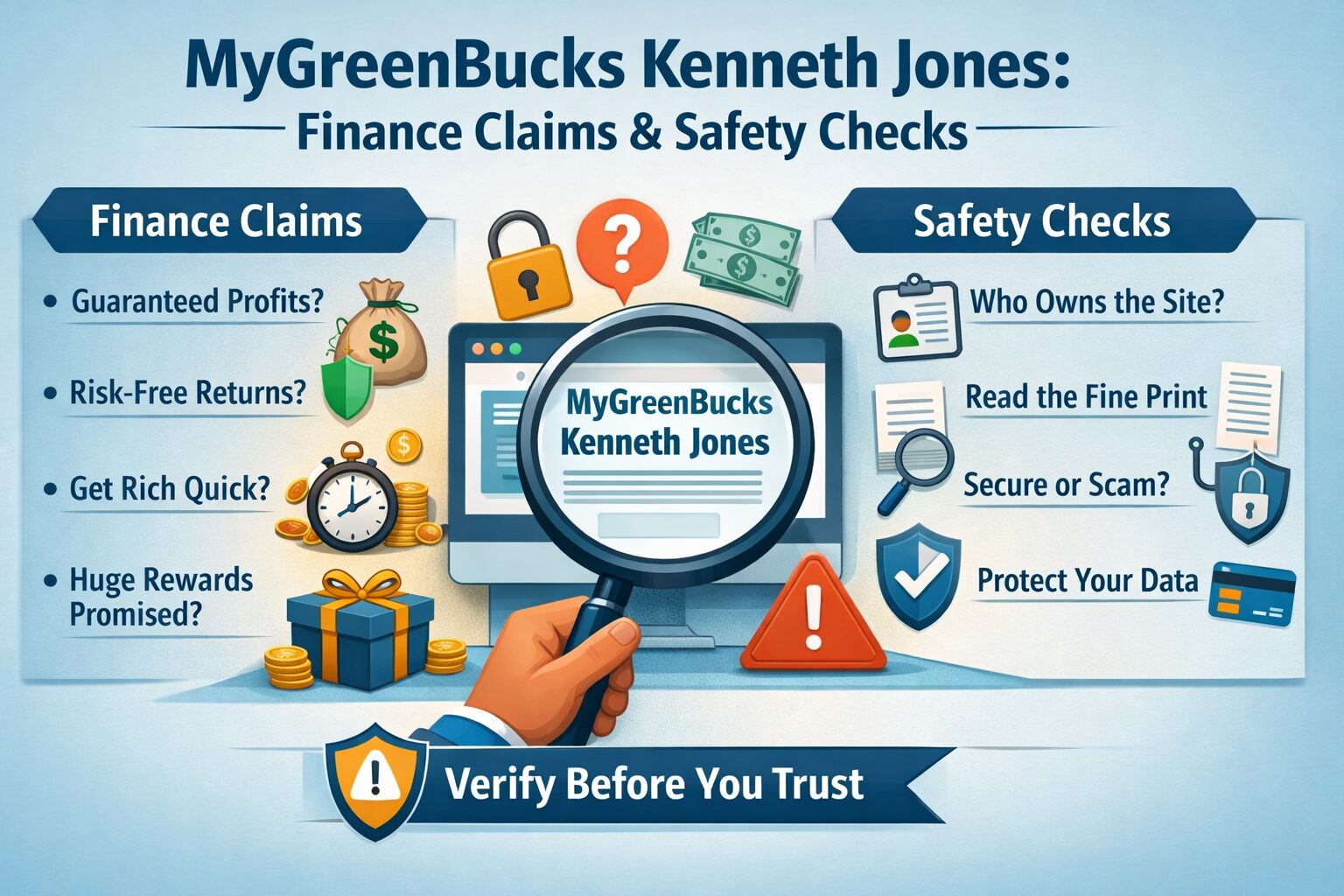
Before judging whether something is safe, identify the exact source connected to the term. Are you seeing a website, a Facebook page, a YouTube channel, a TikTok account, a newsletter, or an app listing? A real brand usually has a consistent name across its pages, with the same logo, same “about” text, and the same contact details. If you see the same phrase copied across many unrelated pages, or the content feels pasted and generic, that is often a sign that the name is being reused for traffic rather than tied to a real, accountable entity.
Ownership and identity checks that matter
If the term leads you to a website or business page, look for basic identity signals that responsible finance publishers usually provide. Clear ownership does not mean someone is famous or public, but it should show accountability: who runs it, how to contact them, what region they operate in, and what their purpose is. If “Kenneth Jones” appears as an owner or writer, see whether that name connects to a consistent profile, a stable history of posts, and a clear explanation of role. A single name on a page is not proof by itself, but consistency across time is a strong trust signal.
Content quality checks for finance topics
Finance content can be helpful even when it is simple, but it should still be careful and balanced. Reliable finance writing usually explains both benefits and limits, uses realistic examples, and avoids pressure language. Watch for warning signs like dramatic “before and after” stories with no details, claims that everyone qualifies for a product, or advice that ignores risk. Also pay attention to whether the content pushes you toward urgent action, because safe finance education rarely needs a countdown timer.
Safety checklist you can run in two minutes
Use this quick checklist before you sign up, pay, or share personal details related to MyGreenBucks Kenneth Jones:
-
Confirm the exact website or account name and check for copycat pages
-
Look for a real “About” section, contact method, and clear purpose
-
Read the privacy policy in plain terms and see what data is collected
-
Avoid offers that promise guaranteed income or “risk-free” profits
-
Be cautious with any request for ID photos, bank logins, or one-time codes
-
Search the brand name plus words like “review,” “complaint,” or “scam”
-
Test support with a simple question before sharing sensitive info
-
If payment is involved, use methods with buyer protection when possible
Red flags that deserve extra caution
Some warning signs are common in shady finance offers, and they show up across many names and brands. Be careful if you see guaranteed returns, “limited spots,” pressure to move to private chat, or requests for upfront fees to “unlock” earnings. Another major red flag is being asked to share bank login details, card PINs, or security codes sent to your phone. Legit services do not need those. If the content tries to isolate you—like “don’t tell anyone” or “act now before it’s gone”—that is also a signal to step back.
If money, investing, or rewards are involved, verify the rules
If the page or product claims you can earn rewards, cashback, or investment gains, the key is to understand exactly how it works. Where does the money come from? Are the terms clear? Are withdrawals explained in normal language? Do fees appear only after you sign up? The more complicated the process feels, the more important it is to read the fine print and look for user experiences that match the claims. Even honest platforms can have strict limits, long payout times, or hidden costs, and you should know those before you commit.
Protecting your personal information
Many finance-related platforms request personal details, but not all requests are necessary. A budgeting blog should not need your ID. A simple newsletter should not need your home address. If something asks for sensitive data, ask yourself if the request matches the service. Also consider the risk of identity theft: your full name, phone number, address, and date of birth can be enough to cause problems if stored poorly or shared. When in doubt, give the minimum information needed or walk away.
How to check whether a page is a copycat
Copycat pages often look convincing at first glance because they copy logos, colors, and even screenshots. The difference is usually in small details: a slightly different spelling, a strange handle, a new account with few posts, or comments that look fake or repeated. Another clue is when the page constantly reposts the same message and pushes people into private messages. If you can’t find a consistent history, a clear owner story, and stable contact details, treat it as unverified.
What to do if you already clicked or shared details
If you already interacted with something connected to this term, you can still reduce risk. Change passwords if you reused them anywhere, enable two-step verification on important accounts, and watch for unusual login alerts. If you shared bank or card details, contact your bank or card provider quickly to ask about next steps, including monitoring or replacing a card. If you sent money and now feel uneasy, save screenshots, receipts, and chat logs so you have a clear record if you need to dispute or report the issue.
Keeping a balanced view without panic
It is important to stay calm and practical. A confusing search term does not automatically mean a scam, and it is also possible that people are simply trying to identify a blog author, a profile name, or a finance content page. The goal is not to assume the worst. The goal is to verify who is behind the content, understand what is being promised, and protect your money and personal information while you investigate.
Final Thoughts / Conclusion
MyGreenBucks Kenneth Jones can feel unclear at first because it blends a finance-sounding label with a personal name, and that mix often leads to search confusion. The safest approach is to confirm the exact source you are dealing with, judge the realism of any money claims, and use simple safety checks before you sign up, pay, or share sensitive data. If anything feels rushed, vague, or too good to be true, take a step back. In personal finance, being careful is not being negative—it is being smart.
FAQs
What is MyGreenBucks Kenneth Jones most likely referring to?
It usually refers to a finance-related name showing up online, which could be a website, a social page, a username, or an author label. Because the phrase combines a brand-like term with a personal name, it can also appear when search results mix different sources together. The best first step is to identify the exact page, site, or account behind the words.
Is MyGreenBucks Kenneth Jones a real person or a brand?
It can be either, and sometimes it is both in the sense that a person may run a brand or publish content under a brand name. A person’s name listed on a page does not automatically prove ownership or credibility. Look for consistent history, clear contact details, and a stable identity across platforms.
Why do finance names like this show up in search results so often?
Finance content is widely shared because many people want help with budgeting, saving, debt, and earning. That makes it common for similar names to spread across blogs, social media, and reposted content. Sometimes the name is used honestly, and other times it is reused to attract clicks.
What are the biggest safety checks before trusting a finance page?
Start by confirming who runs the page and how to contact them. Then review what the page promises and whether the claims are realistic and clearly explained. Finally, protect your personal data by avoiding unnecessary forms, ID requests, or pressure to move to private chats.
What are common red flags in money-making claims?
Guaranteed profits, “risk-free” returns, and fast payouts with no clear process are major warning signs. Pressure language, countdown timers, and requests for upfront fees also deserve caution. Any request for passwords, PINs, or one-time security codes should be treated as unsafe.
Should I share my bank or card details to “verify” an account?
In most cases, no. Many scams use “verification” as an excuse to collect sensitive information. If a service truly needs payment details, it should use secure, standard checkout methods and never ask for private security information like PINs or codes.
What should I do if I already gave information and now feel worried?
Change passwords right away, especially if you used the same password elsewhere. Turn on two-step verification for important accounts and monitor for unusual activity. If you shared card or bank details, contact your provider quickly to ask about monitoring and possible protective steps.
How can I tell if a page is a copycat using the same name?
Copycats often have small differences in spelling, newer accounts, vague “about” sections, and repeated posts that push people into private messages. They may also have comments that look fake or recycled. If the identity is unclear and the content feels copied, treat it as unverified and avoid sharing personal data.
ALSO READ THIS : Your Topics | Multiple Stories Explained: Topics, Feeds, Order

Best Movirz Alternatives for Streaming Movies Online

Who Is Erin Trussell? Full Details About Duncan Trussell’s Wife and Personal Life

What Is Twizchat and How Does It Work for Users Today

What Is SosoActive and How Does It Work for Users

How to Identify 2RSB9053 Parts and Their Key Features

What Is Caricatronchi and How Does It Work Today

What SocialWick offers for safe social media growth

What Is Cumhuritey and How It Works Around the World

What Is Hormita and How It Is Used Around the World

How Pappedeckel Helps in Packaging and Daily Use

Galoble

MMSVEE24 Explained in Simple Terms for Beginners
What SocialWick offers for safe social media growth

HeilxStudio
How Pappedeckel Helps in Packaging and Daily Use
Who Is Erin Trussell? Full Details About Duncan Trussell’s Wife and Personal Life
Best Movirz Alternatives for Streaming Movies Online
How to Identify 2RSB9053 Parts and Their Key Features
What Is Twizchat and How Does It Work for Users Today
What Is Hormita and How It Is Used Around the World
Best Movirz Alternatives for Streaming Movies Online
Who Is Erin Trussell? Full Details About Duncan Trussell’s Wife and Personal Life
What Is Twizchat and How Does It Work for Users Today
What Is SosoActive and How Does It Work for Users
How to Identify 2RSB9053 Parts and Their Key Features
What Is Caricatronchi and How Does It Work Today
What SocialWick offers for safe social media growth
What Is Cumhuritey and How It Works Around the World
What Is Hormita and How It Is Used Around the World
How Pappedeckel Helps in Packaging and Daily Use
-
 Technology4 months ago
What Is 001-gdl1ghbstssxzv3os4rfaa-3687053746? Uses Explained
-

 Celebrity3 months ago
Who Is Lauren Deleo? What to Know About Jake Lacy’s Wife
-

 Celebrity4 months ago
Who Is Debra Peifer? The Untold Story Behind Zach Bryan’s Rising Fame
-
 Blog4 months ago
What Is cilkizmiz24? Explained Clearly: Meaning, Use, and Notes