
Blog
Is erosme a Name, Brand, or Site? A Simple Guide

If you searched erosme and felt unsure about what it is, you’re not alone. This term can point to more than one thing, depending on where you saw it and why you searched. In some places it appears like a personal name, in others it looks like a brand or social handle, and sometimes it shows up because of a typo or a look-alike word. This guide breaks down the most common meanings in plain language, so you can figure out what you’re looking at and what to do next.
Why this word confuses people
Many modern searches are messy because the same word can be used in different ways across the internet. A single term might be a username on one platform, a first name on another, and a label inside a file name somewhere else. On top of that, short words are easy to mistype, and search engines often guess what you meant. That mix can create confusing results that don’t seem to match your intent, even when you typed the word correctly.
First possibility: erosme as a personal name
In some contexts, erosme appears as a name. This can happen with rare names, alternative spellings, or names that show up in family records, profiles, and public directories. Names can travel across languages and regions, so the same sound may be written in different ways. That’s why you may see “meaning” pages, surname listings, or profile results tied to the same word, even if you’ve never heard it used as a name before.
What it may be related to
When a name looks unfamiliar, it is often connected to an older name form, a regional spelling, or a shortened version of something longer. Some name spellings are also influenced by accents or letter swaps that happen when people move between countries or when records are typed into databases. If you saw the word near a person’s profile, a family tree, a school page, or a public record, it is more likely you’re dealing with a name usage rather than a brand or a website.
Where you’ll usually see it as a name
Name uses tend to show up in places that list people: social profiles, community pages, music credits, comment sections, directory-style results, or genealogy-style summaries. Sometimes the word is part of a full name, and sometimes it is a username derived from a name. A quick clue is the surrounding text. If it’s next to an age, a location, a photo, or a “follow” type interface, you’re probably looking at a person or an account tied to a person.
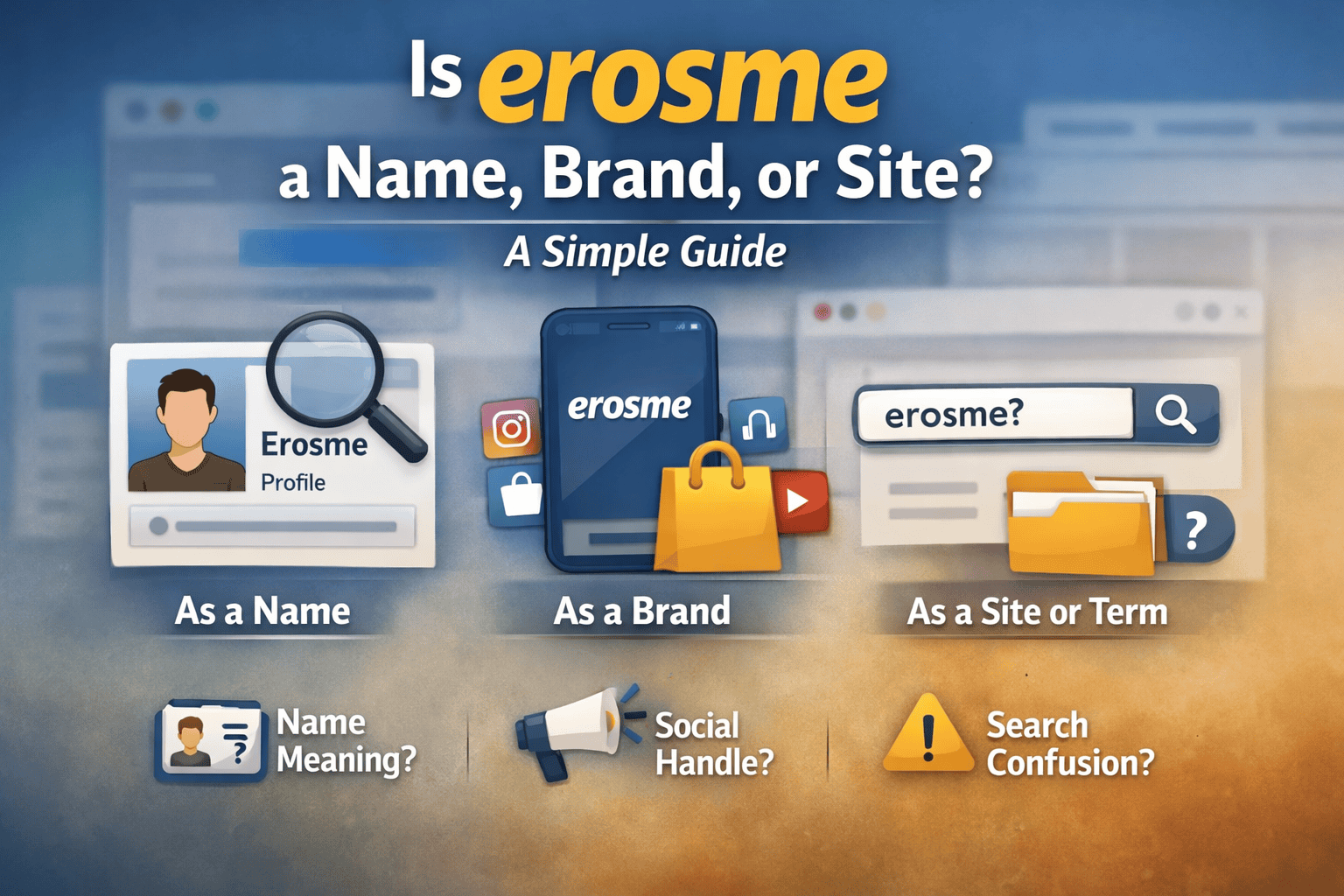
Second possibility: erosme as a brand or handle
Another common reason people run into this term is branding. Short, memorable words make good account names. A small shop, creator, or side project may choose a unique handle that is easy to remember and hard to copy. Over time, that handle can show up on multiple platforms, and people searching it might assume it’s a company name or an official site when it’s simply a username.
How handles get picked and repeated
Handles often start as a personal nickname, a mash-up of words, or a stylized phrase that “sounds right.” Once it’s used in one place, the owner may try to claim it across other sites to stay consistent. That creates a trail of results that look connected, even when there is no single official home page. If you’re seeing the same word on social platforms, storefront profiles, or music playlists, you may be seeing a brand identity more than a standalone website.
How to tell a real brand from a copy
Because usernames are public, some accounts imitate others. To avoid confusion, look for consistent signals: the same profile photo style, the same writing tone, the same product type, and the same posting pattern over time. Be careful with accounts that have almost the same spelling but add extra symbols or numbers. If something feels off—like a sudden request for personal details, payment, or a rushed offer—treat it as unverified until you can confirm it through normal, cautious steps.
Third possibility: erosme as a site or search term
Sometimes people assume a word is a website just because it appears in search results with lots of “pages.” But a term can also be used as a tag, a label, or a piece of text inside auto-generated content. That is especially common when apps create filenames, when playlists are shared, or when reposted content keeps the same label across multiple places. In those cases, what you’re seeing is more like a digital footprint than a dedicated site.
The “look-alike” and typo problem
Short words are easy to confuse with similar-looking terms. A single missing or swapped letter can send you to a completely different topic. This is one of the biggest reasons erosme searches feel inconsistent. You might have meant a different word, or your device may have corrected the spelling without you noticing. This can also happen when you copy and paste text from a screenshot or a message and a character gets changed along the way.
When it’s tied to file names, playlists, or tags
If you found the word inside a file name, browser history, or a shared playlist title, it may not be a “thing” on its own at all. Many services label content with short identifiers. People also reuse titles across posts, which spreads the same term far beyond the original source. That’s why you can see a scattered mix of results—profiles, name pages, and random mentions—without a clear single definition.
What people usually mean when they type it
Most searchers fall into a few common situations, and recognizing yours helps you decide what to trust and what to ignore:
-
You saw the word as a username and want to know who runs the account
-
You saw it in a name context and want to know if it’s a real name and where it comes from
-
You typed it by mistake while searching a similar-looking word
-
You found it in a file name, a playlist, or your history and want to understand why it appeared
-
You want to know whether it’s safe to click results connected to the term
Safety, privacy, and what to do next
When a search term feels unclear, it’s smart to move slowly. You don’t have to panic, but you also don’t have to click everything to “figure it out.” The safest approach is to treat it like a label until you can confirm the context. Ask yourself: Where did I see it first—an app, a message, a profile, a download, or a search suggestion? That single detail often explains the whole mystery.
If you clicked something you didn’t expect
If you opened a result and it led to content you didn’t want, close the tab and don’t interact further. Avoid signing in, sharing personal details, or downloading anything when you’re unsure. If your browser shows pop-ups or tries to push notifications, deny those requests. If you’re on a shared device, it’s also a good idea to clear that tab from your recent history, so it doesn’t surprise someone else later.
If it’s showing up in your device or browser history
If you’re seeing the term repeatedly in your history, that usually means one of three things: you visited a page with that label, an app loaded content that included it, or something you typed was corrected into it. You can clear your browsing history for that time range and remove stored suggestions. Also check any recently installed apps or browser add-ons if the word appears without you searching it. In most cases, it’s simply a trace of something you viewed, not proof of a bigger issue.
If you’re publishing a guide about this term
If you’re writing a page to help others understand this topic, keep it simple and honest. Start by explaining that the word can refer to different things and that the meaning depends on context. Then cover the three main paths—name, brand/handle, and label/typo—using clear examples and safety notes. Readers trust guides that reduce confusion, respect privacy, and avoid big claims that can’t be proven. A calm, practical tone and clear structure will do more for readers than dramatic language.
Final Thoughts / Conclusion
erosme can be a name in some contexts, a brand or username in others, and sometimes it’s just a label that shows up because of a typo or repeated tagging. The fastest way to understand it is to focus on where you first saw it and what was around it—profile clues, file names, app screens, or search suggestions. Once you identify the context, you’ll know whether to treat it like a person, an account, or a simple piece of text that got repeated online. When in doubt, stay cautious, protect your privacy, and don’t click deeper until the meaning is clear.
Frequently Asked Questions (FAQs)
What is erosme in the simplest terms?
It’s a word that can point to different things online, such as a personal name, a username, or a label inside content. The meaning depends on where you saw it first and what the surrounding details were.
Is erosme a real name?
It can be used as a name in some places, especially in profiles or records where rare spellings appear. If you saw it next to a person’s photo, location, or personal details, it’s more likely a name or a name-based username.
Is erosme a brand?
It might be. Many small brands and creators choose short, unique handles to use across social platforms. If the word appears as an account name with posts, products, or a consistent theme, it’s likely being used as a brand identity.
Is erosme a website?
Sometimes people assume it is because search results show many pages, but that doesn’t always mean there is one official site. The word may show up because it’s used in titles, tags, or shared content across multiple places.
Why do my search results look mixed and confusing?
Because the same term can be used in several ways, and search engines may also show results for similar spellings. That mix can pull in name pages, social profiles, and unrelated mentions all at once.
Could erosme be a typo for something else?
Yes, and that’s common with short words. A small spelling change can lead to a different topic entirely, and autocorrect can also change what you intended to type without you noticing.
Is it safe to click results related to erosme?
It depends on the specific result, not just the word. If you don’t recognize the source, avoid downloading files, giving personal information, or allowing notifications. When you’re unsure, close the page and stick to well-known platforms you already trust.
What should I do if I keep seeing erosme in my history or suggestions?
Clear your recent history and remove search suggestions if they bother you. If it appears without you typing it, review recent apps, extensions, or shared accounts that might be generating searches in the background, and update your privacy settings.
ALSO READ THIS : 158.63.258.200 Explained: Not a Real IP Address?

Best Movirz Alternatives for Streaming Movies Online

Who Is Erin Trussell? Full Details About Duncan Trussell’s Wife and Personal Life

What Is Twizchat and How Does It Work for Users Today

What Is SosoActive and How Does It Work for Users

How to Identify 2RSB9053 Parts and Their Key Features

What Is Caricatronchi and How Does It Work Today

What SocialWick offers for safe social media growth

What Is Cumhuritey and How It Works Around the World

What Is Hormita and How It Is Used Around the World

How Pappedeckel Helps in Packaging and Daily Use

Galoble

MMSVEE24 Explained in Simple Terms for Beginners
What SocialWick offers for safe social media growth
Best Movirz Alternatives for Streaming Movies Online

HeilxStudio
How Pappedeckel Helps in Packaging and Daily Use
Who Is Erin Trussell? Full Details About Duncan Trussell’s Wife and Personal Life
What Is Cumhuritey and How It Works Around the World
How to Identify 2RSB9053 Parts and Their Key Features
What Is Twizchat and How Does It Work for Users Today
Best Movirz Alternatives for Streaming Movies Online
Who Is Erin Trussell? Full Details About Duncan Trussell’s Wife and Personal Life
What Is Twizchat and How Does It Work for Users Today
What Is SosoActive and How Does It Work for Users
How to Identify 2RSB9053 Parts and Their Key Features
What Is Caricatronchi and How Does It Work Today
What SocialWick offers for safe social media growth
What Is Cumhuritey and How It Works Around the World
What Is Hormita and How It Is Used Around the World
How Pappedeckel Helps in Packaging and Daily Use
-

 Technology4 months ago
What Is 001-gdl1ghbstssxzv3os4rfaa-3687053746? Uses Explained
-

 Celebrity3 months ago
Who Is Lauren Deleo? What to Know About Jake Lacy’s Wife
-

 Celebrity4 months ago
Who Is Debra Peifer? The Untold Story Behind Zach Bryan’s Rising Fame
-

 Blog4 months ago
What Is cilkizmiz24? Explained Clearly: Meaning, Use, and Notes