
Blog
Davisgonensfw Guide: What to Know Before Opening NSFW Posts

Seeing a word like Davisgonensfw in a search result, a social media caption, or a message can feel confusing and a little risky. The “nsfw” part is a common internet warning that usually means “not safe for work,” but the full term may look like a username, a tag, or a file label that appeared out of nowhere. This guide is written for regular readers who want clear, practical help before opening anything that could contain adult material, graphic images, or misleading content. You’ll learn what this label might mean, why it shows up, what risks to watch for, and how to protect your privacy and devices when you’re not sure what you’re about to click.
What “NSFW” Usually Means Online
NSFW is a warning used across the internet to signal content that may be inappropriate in public settings. That can include nudity, explicit sexual material, graphic violence, or other sensitive topics. People use the label to give others a heads-up before they open something at work, around family, or on shared screens. It is not a legal term and it doesn’t tell you exactly what you’ll see; it simply suggests the content could be adult, graphic, or not suitable for all audiences. Because it’s a broad warning, it can also be misused to get attention or to trick someone into clicking.
What Davisgonensfw Might Be
Davisgonensfw is not a standard safety label by itself, so it usually appears as part of a larger pattern: a username, a channel name, a file name, a hashtag, or a search term people share. It could be a creator handle that includes “nsfw” to signal that their posts are adult-only, or it could be a tag attached by someone else. It can also appear when content is reposted across multiple platforms, causing the same phrase to spread through captions, mirrored pages, and auto-generated file names. The key point is that a term like this does not automatically confirm who made the content or where it came from, so you should treat it as a clue, not proof.
Why You Might See It in Searches and Suggestions
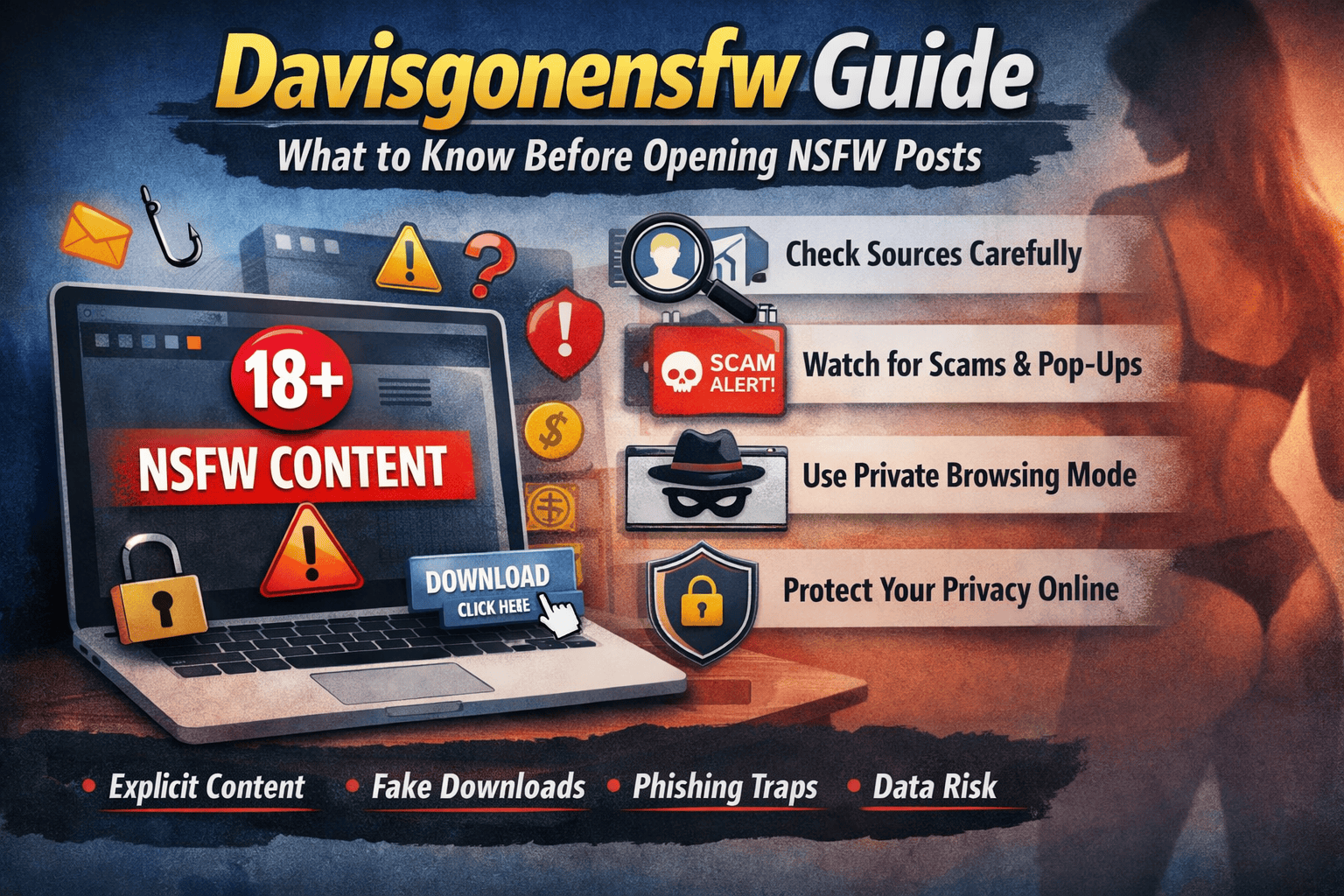
Search engines and social platforms often show suggestions based on what people are looking for, not on what is safe or verified. If a phrase is frequently typed, shared, or copied into posts, it can surface more often in autocomplete and related searches. Sometimes a single viral post or a popular account name causes a chain reaction where other users copy the phrase to ride the attention. In other cases, low-quality sites repeat trending terms in titles just to pull in clicks, even when the page content is unrelated. That is why you can see a strange term appear even if you never searched for it directly.
Common Places This Label Shows Up
Most people encounter terms like this in a few predictable areas: social media captions, repost pages, private group chats, and “collection” sites that gather images from many places. It also shows up inside file names saved from the internet, because some sites automatically name downloads using the page title or the tag list. Another common source is browser history and suggested searches, especially when someone shares a copied phrase and you tap it without thinking. If multiple people use the same term, it can become a kind of informal label that travels with the content wherever it gets reposted.
What Risks Come With Opening Unknown NSFW Posts
The first risk is simple: you may see explicit or graphic content when you don’t expect it, including content that is disturbing rather than merely “adult.” The second risk is social and professional, because accidental exposure on a shared screen can create real-world problems. The third risk is digital safety, since adult content labels are often used by scam pages that push fake downloads, aggressive pop-ups, or “verify your age” traps. There is also a privacy risk, because some sites track clicks heavily, load hidden scripts, or attempt to get you to allow notifications. In short, the label can be a warning about content, but the bigger danger is that it can be a doorway to shady pages if you click without checking.
How Scams Use NSFW Curiosity Against People
Scammers know that curiosity is powerful, and adult content is one of the oldest ways to pull clicks. A page may show a blurred preview and claim you must “confirm you’re 18” by installing an app, entering personal information, or subscribing to notifications. Another common trick is the fake video player that forces you to click several “play” buttons, each one opening a new tab or ad. Some pages pretend your device is infected and push you to download a “cleaner” tool that is actually unwanted software. When you see a term like Davisgonensfw attached to unknown pages, it’s smart to assume some results may be bait.
How to Judge a Post Before You Open It
You can reduce risk by doing a quick “preview check” before tapping anything. Look closely at the platform and account name—does it appear consistent and real, or does it look like a copycat with odd spelling and random numbers? Check the caption style and comments; real accounts usually have normal engagement patterns, while scam posts often have repetitive comments and generic promises. If a link preview looks strange, has an off-brand layout, or claims you must install something to view, treat it as unsafe. Also pay attention to how you found it: if it arrived through a random message or a newly created account, caution matters even more.
Safer Ways to View Sensitive Content Without Regret

If you choose to view NSFW content, do it with control. Use a private browsing window so it doesn’t become part of your normal search history and so cookies are limited. Keep your device volume down and be mindful of auto-play, especially in public spaces. Avoid signing in with your main accounts on unknown sites, and never reuse a password. If you’re on a shared computer, don’t open questionable pages at all—shared devices are where accidents happen most. You can also adjust your platform settings to hide sensitive media by default, which adds a layer of protection before any image or video appears.
Practical Safety Checklist Before Clicking
This single checklist is the best way to stay safe when you see a term like Davisgonensfw and you’re not sure what it leads to.
-
Confirm the platform is one you recognize and trust
-
Avoid pages that demand installs, “age verification,” or notification access
-
Close tabs that open extra pop-ups or redirect you repeatedly
-
Do not enter passwords, phone numbers, or payment details to “unlock” content
-
Use private browsing for unknown links and clear site data afterward
-
Keep your device and browser updated to reduce exploit risk
-
If something feels off, exit immediately—curiosity is not worth it
How to Protect Your Privacy and Digital Footprint
Even when content is not a scam, adult pages can leave a trail. Searches, cookies, and site data can influence what you see later in recommendations, and that can be awkward if you share your device. The safest move is to treat sensitive browsing as a separate activity from your main accounts. Turn off personalized ads where possible, avoid allowing websites to send notifications, and regularly review your browser’s stored site data. If you live with others or share a device, consider using separate user profiles so your browsing doesn’t mix with someone else’s. Privacy isn’t about hiding—it’s about preventing unwanted surprises and protecting your control.
What to Do If You Already Clicked Something Sketchy
If you clicked and the page behaved strangely—pop-ups, redirects, fake warnings—close it right away. Then check your browser for any new extensions you didn’t install on purpose and remove them. Review notification permissions and block any sites you don’t recognize, because “allow notifications” can turn into constant spam. Run a reputable security scan on your device, especially if anything was downloaded. If you entered a password on a suspicious page, change it immediately and turn on two-step verification. The goal is to respond calmly and quickly, not to panic.
Why People Pair Names With “NSFW” and What That Doesn’t Prove
Sometimes a real creator includes “nsfw” in their handle to set expectations, and sometimes other users attach “nsfw” to a name as a label for reposted content. But pairing a name with “nsfw” doesn’t confirm identity, consent, or authenticity. It doesn’t prove the person is the uploader, and it doesn’t prove the content is even related to that name. In some cases, people use popular names to attract attention, even when the content is unrelated or misleading. When you see Davisgonensfw, it’s better to think of it as a searchable tag or identifier that might be used in different ways, not as a reliable source.
How to Reduce NSFW Content in Your Feeds
If you don’t want this kind of content showing up, you have options. Most platforms let you hide sensitive content, mute certain keywords, or filter search results. You can also block accounts that repeatedly post adult material, and you can reset or clear your recommendation history if your feed has drifted in a direction you don’t like. On some platforms, turning on “restricted mode” or similar settings can reduce explicit posts. If you share your device with family, consider enabling safer browsing settings and using separate profiles so one person’s clicks don’t shape everyone else’s recommendations.
Final Thoughts / Conclusion
Davisgonensfw is best treated as a warning sign and a clue, not a guarantee of what you will find. The “nsfw” label often signals adult or sensitive content, but it can also be used as bait by scam pages that want clicks, data, or downloads. The safest approach is to slow down, preview where you’re going, and protect your privacy before opening anything unknown. With simple habits—like avoiding forced downloads, blocking notifications, using private browsing for risky links, and keeping your device clean—you can stay in control and avoid the most common mistakes people make when curiosity meets the internet.
Frequently Asked Questions (FAQs)
What does Davisgonensfw mean exactly?
It usually looks like a combined term: a name or handle paired with “nsfw,” which is a warning for adult or sensitive content. The exact meaning depends on where you saw it, since it can be a username, a tag, or a shared search phrase.
Is Davisgonensfw a real person or an official brand?
It may be connected to a person’s handle or a page name, but the term alone doesn’t prove it is an official identity. Names can be copied, reused, or attached to content by other people.
Does “nsfw” always mean explicit adult content?
Not always. It can also refer to graphic violence, disturbing images, or other sensitive material that isn’t appropriate for work or public spaces.
Why am I seeing Davisgonensfw in suggestions if I didn’t search for it?
Suggestions can appear because the term is trending, because someone shared it with you, or because similar topics were searched on your device or network. Sometimes low-quality sites repeat terms to attract clicks, which can also push the phrase into visibility.
Is it safe to open posts labeled NSFW?
It depends on the platform and source. Even if the content is just adult media, some pages use NSFW labels to hide scam tactics like pop-ups, redirects, and fake “verification” screens.
What should I avoid doing on NSFW pages?
Avoid installing anything, entering personal details, turning on notifications, or signing in with important accounts. If a page demands those steps to view content, it’s a strong sign to leave.
How can I stop NSFW content from appearing on my feed?
Use platform safety settings to hide sensitive media, mute keywords, and block accounts that post explicit content. Clearing your search and watch history can also help reset recommendations over time.
What should I do if I clicked a suspicious page and it opened pop-ups?
Close the tabs immediately, remove any new browser extensions you didn’t choose, and check your notification permissions. If you downloaded anything or entered a password, run a security scan and change your password right away.
ALSO READ THIS : pragmatic gacor200.wulyf.org: Legit Site or Redirect?

Rosboxar Explained: Features, Benefits, and What Makes It Different in 2026

NovaPG Features Breakdown: Everything Users Need to Know This Year

Understanding 9253612736: Uses, Risks, and Safety Tips

Schoology Alfa Features Breakdown: Tools That Enhance E-Learning Experience

Beginner’s Guide to 5134jgg: Definition, Uses, and Trends

Dympigal Explained: Everything You Need to Know in 2026

Top Benefits of KaliScan: Why It’s Gaining Popularity Online

How Jhonbaby777 Is Shaping Online Conversations and Communities

The Ultimate Guide to Understanding Byfsrhlu7g6ewot

MobilesRUs vs Other Mobile Stores: Which One Offers Better Value?
Rosboxar Explained: Features, Benefits, and What Makes It Different in 2026
NovaPG Features Breakdown: Everything Users Need to Know This Year
Understanding 9253612736: Uses, Risks, and Safety Tips
Schoology Alfa Features Breakdown: Tools That Enhance E-Learning Experience
Beginner’s Guide to 5134jgg: Definition, Uses, and Trends
Dympigal Explained: Everything You Need to Know in 2026
Top Benefits of KaliScan: Why It’s Gaining Popularity Online
How Jhonbaby777 Is Shaping Online Conversations and Communities
The Ultimate Guide to Understanding Byfsrhlu7g6ewot
MobilesRUs vs Other Mobile Stores: Which One Offers Better Value?
-
 Technology8 months ago
What Is 001-gdl1ghbstssxzv3os4rfaa-3687053746? Uses Explained
-

 Celebrity8 months ago
Who Is Petra Exton? A Clear Look at Joe Wilkinson’s wife
-

 Celebrity8 months ago
Who Is Lauren Deleo? What to Know About Jake Lacy’s Wife
-

 Celebrity8 months ago
Who Is Ilan Tobianah? Early Life, Lawyer Career, and Net Worth