
Blog
Beliktal Meaning Explained: Place, App, or Just a Trend Word?


If you’ve landed on the word Beliktal, you’re not alone. People often search unusual terms because they appear suddenly in a browser suggestion, a social post, a file name, or a random message. The tricky part is that a single word can point to many things at once: a real place, a brand name, a typo, or even an auto-generated label. This guide breaks down the most likely meanings, why the term shows up, and how to figure out what it refers to in your specific case—without guessing or adding drama.
Why this word causes confusion
A term like this can feel “real” because it looks structured, easy to pronounce, and similar to names used for locations or apps. At the same time, it may have no single official definition. That mix creates confusion: one person might be looking for a destination, another might be trying to remove a strange browser entry, and someone else might be checking whether an app is safe. The goal is to treat the term as a clue and follow the context where you found it, rather than assuming one meaning fits everyone.
What “meaning” can look like in modern internet terms
Not every word online has a dictionary-style meaning. In today’s web, many labels exist mainly to organize content, track clicks, or name files. A word can “mean” a folder name, a project title, a username, or a short brand label, even if it has no history as a traditional word. That’s why searching Beliktal can return mixed results: blogs that speculate, pages that repeat each other, and odd snippets that don’t clearly match what you saw. Instead of chasing a single definition, it helps to ask: where did it appear, and what was happening when it appeared?
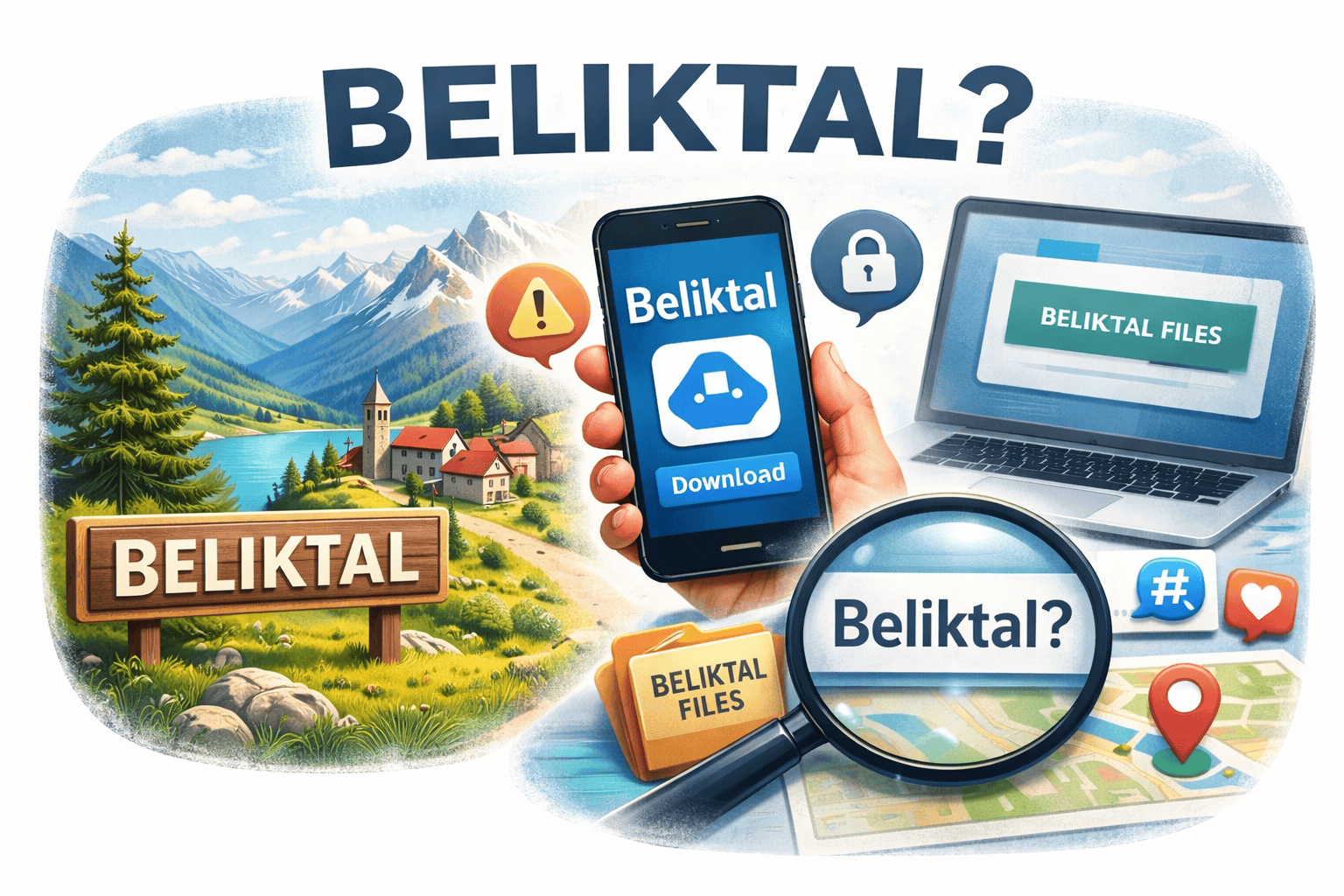
Possibility 1: A place name
One common reason people assume it’s a place is the shape of the word. Many real places have names that look similar—short, distinct, and not obviously English. If it truly is a location, you’ll usually see it connected to clear place signals: maps, travel photos, local guides, or consistent mentions tied to one region. If your search results show scattered mentions with no consistent country, no map presence, and no reliable local context, that’s a sign it may not be a recognized destination name, or it may be spelled differently than what you’re searching.
Possibility 2: An app or digital tool name
It’s also reasonable to suspect an app, because app names are often invented words designed to be memorable and easy to trademark. If Beliktal is used as an app label, you’ll typically find consistent branding—screenshots, a developer name, update notes, or a clear description of what it does. The safest approach is to check whether the name appears in official app listings and whether the developer identity looks established and consistent. If you only see third-party pages talking about it but can’t find a clear “home base” for the product, treat it carefully and avoid downloading anything tied to it just because it’s trending.
Possibility 3: A trend word or social label
Sometimes a word becomes popular simply because it appears in captions, hashtags, short videos, or meme-style posts. Trend words often spread without a stable definition. People reuse them because they look mysterious, aesthetic, or “inside-joke” friendly. In these cases, the meaning is usually whatever the community decides it is in the moment, and it can change quickly. If your first exposure was social media, it may help to look at the surrounding posts: was it used like a tag, a nickname, or a made-up label for a vibe? That context is often more useful than trying to force a single dictionary meaning.
Possibility 4: A typo, autocorrect, or “near match”
A surprisingly high number of searches begin with small errors. A letter swap, a missed space, or autocorrect can turn a normal word into something that looks brand-new. This is especially common on phones, where quick typing creates accidental new strings. If you meant something else—like a similar-looking term, a person’s name, or a product—your results may stay confusing until you test a few nearby spellings. A simple clue is this: if you keep seeing unrelated pages that don’t agree with each other, you may be searching a misspelling or a leftover string from a larger phrase.
Possibility 5: A file name, tag, or auto-generated label
Many “mystery words” appear because of how content is stored and named. Downloads, images, cached pages, and shared files can carry odd names that users never intentionally typed. Some systems generate short labels that look like brand names but are really just internal identifiers. If you saw Beliktal inside a file manager, browser history, or a download folder, it might be the title of a page you visited, a tag embedded in media metadata, or a renamed file passed through multiple platforms. In that situation, the “meaning” is often practical: it’s a label pointing back to where the file came from.
How to identify what it means in your situation
The fastest way to solve this is to work backward from where you saw it. Was it in a search bar suggestion, a message, a social caption, a file name, a notification, or an app list? Each source points to different explanations. Search suggestions often reflect prior searches, popular queries in your region, or accidental typed strings. Messages may reflect a username, a group name, or a shortened link label. Files often reflect page titles or auto-generated naming. The “right” interpretation is the one that matches the trail of context, not the one that sounds most interesting.
Quick checks you can do in minutes
Here are practical checks that help you confirm what you’re dealing with, without overthinking it:
-
Look at the exact place you saw the word and note the surrounding text
-
Try searching the term with one extra context word (like “app,” “download,” “location,” or “meaning”)
-
Check your recent browser history for the page where it first appeared
-
Review recently installed apps and browser extensions you don’t recognize
-
If it appeared in a file, open its details and check where it was downloaded from
-
If it appeared in a message, check the sender and whether others received the same text
When you should be cautious
Most strange words are harmless, but caution is smart when the word appears alongside pressure to click, install, or “verify.” If you saw it in a pop-up, a suspicious ad, or a message that pushes you to download something quickly, treat it as a warning sign. Unknown apps and shady download pages can bundle unwanted software, aggressive ads, or tracking. If you can’t confirm what it is from a reliable source or a clear developer identity, it’s better to pause. Curiosity is fine; installing unknown software is where problems can start.
If it’s tied to your browser
If the term appears in your search bar history or suggestions, it may come from prior searches, copied text, or a single accidental keystroke that got saved. Clearing recent search history often removes it. If it keeps returning, check whether your browser sync is reloading old data from another device. Also review extensions: some extensions change search behavior, inject suggestions, or create unusual page titles that later show up in history. The fix is usually simple—clean up history, disable suspicious extensions, and reset the browser settings if needed.
If it’s tied to your phone or apps
When a word appears as a notification title, a background process name, or a strange icon label, the safest move is to confirm whether it’s part of a legitimate app you installed. Check the install date and permissions. If the app requests access that doesn’t match its purpose—like a flashlight app wanting contacts and SMS—that’s a red flag. Removing unknown apps is often enough. If the issue continues, a phone security scan and a review of accessibility settings can help, since some unwanted apps use accessibility permissions to behave in intrusive ways.
If it’s tied to social media or messaging
In social spaces, a word can be a username, a group name, a tag, or a copy-pasted phrase people repeat. In that case, the “meaning” might not be deep at all. It could be a creator’s handle, a short label for a trend, or a made-up term used for engagement. If you’re trying to understand why it showed up in your feed, check the post’s context and comments. Often you’ll find that people are using the term as a label, not a definition, and the meaning depends on that specific community.
Putting it all together
The simplest, most accurate takeaway is this: Beliktal may refer to different things depending on where you found it. It could be a place name, an app label, a social trend word, a typo, or an auto-generated tag. You don’t need to choose one version blindly. Follow the context, check for consistent signals, and be cautious if downloads or pop-ups are involved. Once you match the word to its source—browser, file, app, or social post—the confusion usually clears quickly.
Final Thoughts / Conclusion
If you’re trying to make sense of Beliktal, the best approach is calm and practical: treat it as a clue, not a mystery with one dramatic answer. Check the context, confirm whether it points to a real place or a real product, and be careful around downloads and pop-ups. In most cases, once you trace where the word came from, the “meaning” becomes clear—and the confusion fades fast.
Frequently Asked Questions (FAQs)
What does Beliktal mean in plain terms?
In most cases, it’s best understood as a label people encounter online rather than a single dictionary word, and its meaning depends on whether it appeared as a place-like name, an app name, a tag, or a saved search string.
Is Beliktal a real place you can visit?
It might be used like a place name in some posts, but a true location usually has consistent map presence and clear regional context, so if you can’t find that consistency, it may be a misspelling or a name used informally.
Is Beliktal an app I should download?
Only consider it if you can confirm an official listing with a clear developer identity and consistent details, and avoid downloads from random pages that don’t clearly explain what the software does.
Why did Beliktal appear in my search suggestions?
Search suggestions can come from your own past searches, synced data across devices, or even an accidental typed string, so checking browser history and synced devices often explains it.
Could Beliktal be a typo of another word?
Yes, small typing errors and autocorrect can create believable-looking new strings, so testing nearby spellings and looking at the original context where you saw it can reveal what was intended.
What if Beliktal shows up as a file name on my device?
File names often come from page titles, download systems, or re-shared content, so checking the file’s details and download source is the quickest way to understand why it’s named that way.
Should I worry if Beliktal appeared in a pop-up or strange message?
If it comes with pressure to click, install, or “verify,” be cautious, because unknown terms in urgent pop-ups and messages are sometimes used to pull users into unsafe downloads or scams.
How can I figure out the correct meaning for my case?
Start with where you saw the word—browser, app list, file folder, or social post—then trace it back using history, install dates, and surrounding context, since the source usually reveals what the label actually refers to.
ALSO READ THIS : What Is cilkizmiz24? Explained Clearly

Rosboxar Explained: Features, Benefits, and What Makes It Different in 2026

NovaPG Features Breakdown: Everything Users Need to Know This Year

Understanding 9253612736: Uses, Risks, and Safety Tips

Schoology Alfa Features Breakdown: Tools That Enhance E-Learning Experience

Beginner’s Guide to 5134jgg: Definition, Uses, and Trends

Dympigal Explained: Everything You Need to Know in 2026

Top Benefits of KaliScan: Why It’s Gaining Popularity Online

How Jhonbaby777 Is Shaping Online Conversations and Communities

The Ultimate Guide to Understanding Byfsrhlu7g6ewot

MobilesRUs vs Other Mobile Stores: Which One Offers Better Value?
Rosboxar Explained: Features, Benefits, and What Makes It Different in 2026
NovaPG Features Breakdown: Everything Users Need to Know This Year
Understanding 9253612736: Uses, Risks, and Safety Tips
Schoology Alfa Features Breakdown: Tools That Enhance E-Learning Experience
Beginner’s Guide to 5134jgg: Definition, Uses, and Trends
Dympigal Explained: Everything You Need to Know in 2026
Top Benefits of KaliScan: Why It’s Gaining Popularity Online
How Jhonbaby777 Is Shaping Online Conversations and Communities
The Ultimate Guide to Understanding Byfsrhlu7g6ewot
MobilesRUs vs Other Mobile Stores: Which One Offers Better Value?
-
 Technology8 months ago
What Is 001-gdl1ghbstssxzv3os4rfaa-3687053746? Uses Explained
-

 Celebrity8 months ago
Who Is Petra Exton? A Clear Look at Joe Wilkinson’s wife
-

 Celebrity8 months ago
Who Is Lauren Deleo? What to Know About Jake Lacy’s Wife
-

 Celebrity8 months ago
Who Is Ilan Tobianah? Early Life, Lawyer Career, and Net Worth