Technology
What Is 001-gdl1ghbstssxzv3os4rfaa-3687053746? Uses Explained

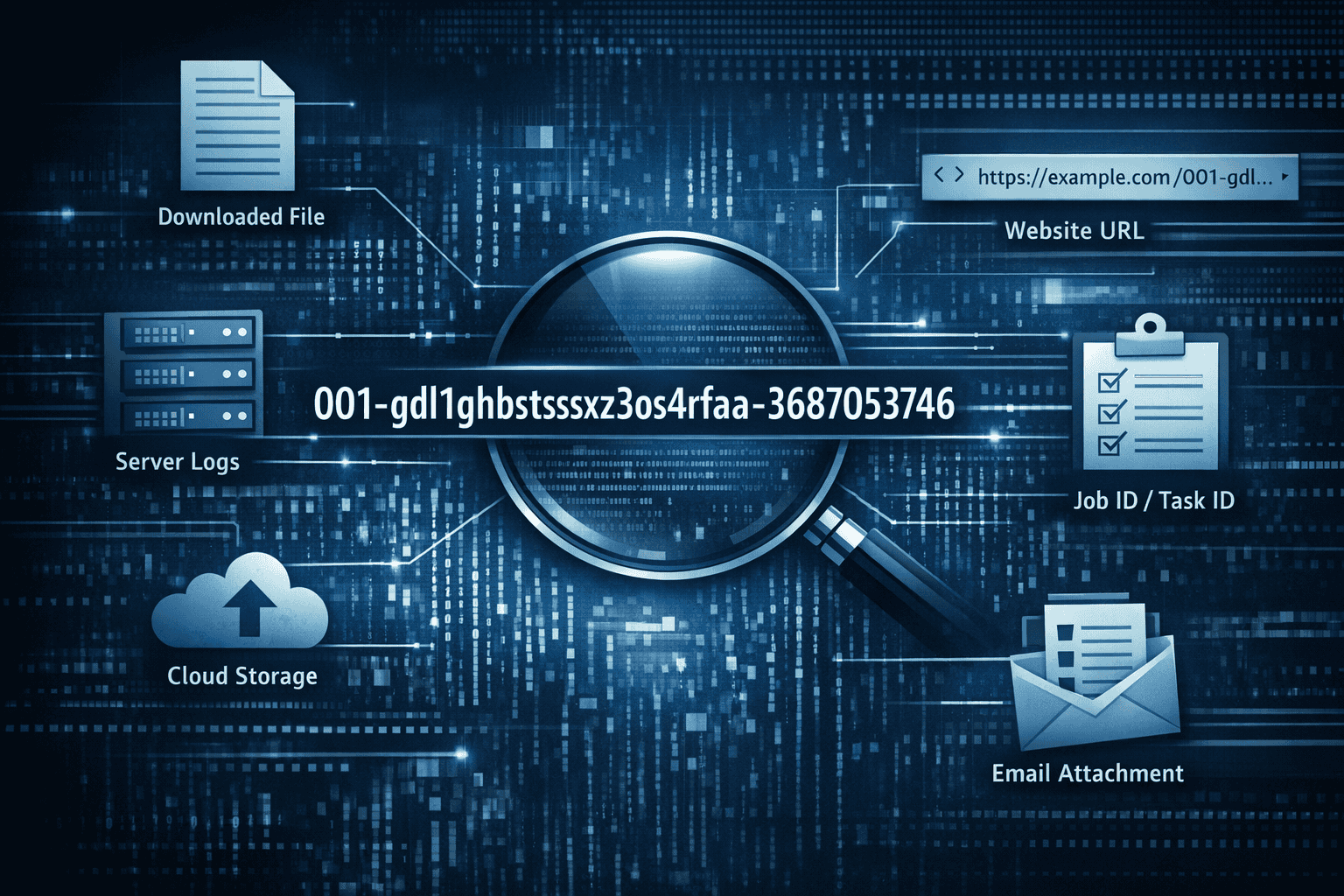
If you’ve landed on a long, odd-looking string like 001-gdl1ghbstssxzv3os4rfaa-3687053746, you’re not alone. People often find strings like this in a download name, inside a website address, in a server log, on a shared file, or even copied into a note by mistake. At first glance it looks like a random code, but in many cases it’s simply an identifier—a label used by a system to keep track of something. This article explains what this kind of string usually means, where it can show up, why it can be confusing, and what you should do if you need to identify it safely.
Understanding What This Kind of String Is
A string like this is usually not a “word” with a dictionary meaning. It’s more like a tag made by a computer system. The format often gives clues: it starts with numbers, includes letters, and ends with a long number. Systems create identifiers like this to avoid mix-ups. For example, two files can have the same name, but an ID helps software know which one is which. The “001” part can suggest a sequence or version. The middle section can look like a scrambled token. The ending number can be a unique counter, timestamp-like value, or database reference. None of these parts automatically point to one single source, which is why people often feel stuck when they first see it.
Why Identifiers Like This Exist in the First Place
Computers handle huge amounts of data, and they need reliable ways to label items. Human-friendly names are not always unique, and users can rename things anytime. So systems often rely on IDs that are unique, consistent, and easy for software to store. These IDs may represent a file, a user session, a message, an order, a backup snapshot, a job run, or a tracking record. They can be generated automatically, which is why they look “random.” In reality, the goal is stability: the system can find the right record even if the name changes or the item is moved.
Where You Might See 001-gdl1ghbstssxzv3os4rfaa-3687053746
These kinds of identifiers can appear in many places, including normal everyday tools. You might see it as a file name after exporting data, downloading something from a platform, or receiving an attachment where the original name was removed. You might also see it as part of a URL path when a website uses internal IDs instead of readable titles. Developers might see it in error logs, analytics reports, database entries, or cloud storage dashboards. Sometimes you’ll even find it inside a mobile app cache folder, where apps store content using machine labels to avoid conflicts.
What It Might Represent: Common Real-World Uses
The most common real-world explanation is that it’s an internal reference created by a service. It could be tied to a file stored in cloud storage, a content delivery system, or a background process that created a downloadable package. It might be a reference used by a content system to retrieve the correct image, video, or document. It could also be a “job ID” generated when a system runs an automated task. In some cases, it can be linked to a single user action like “export report,” “generate invoice,” or “create backup.” The key point is that the string alone usually doesn’t tell you which service made it unless you also know where you found it.
Breaking Down the Structure Without Overthinking It
It’s tempting to try to decode every character, but most of the time you don’t need to. Still, a simple structure check can help. The first part, 001, often hints at ordering, versioning, or a batch number. The middle chunk, gdl1ghbstssxzv3os4rfaa, looks like a token that could be created by an algorithm to make the identifier harder to guess. The final part, 3687053746, looks like a numeric value that could be a counter, record ID, or time-based number. However, these patterns are not universal. Different systems use similar-looking formats, so it’s safer to treat it as a “unique label” rather than a code with a fixed translation.
Why It Shows Up in Searches and Confuses People
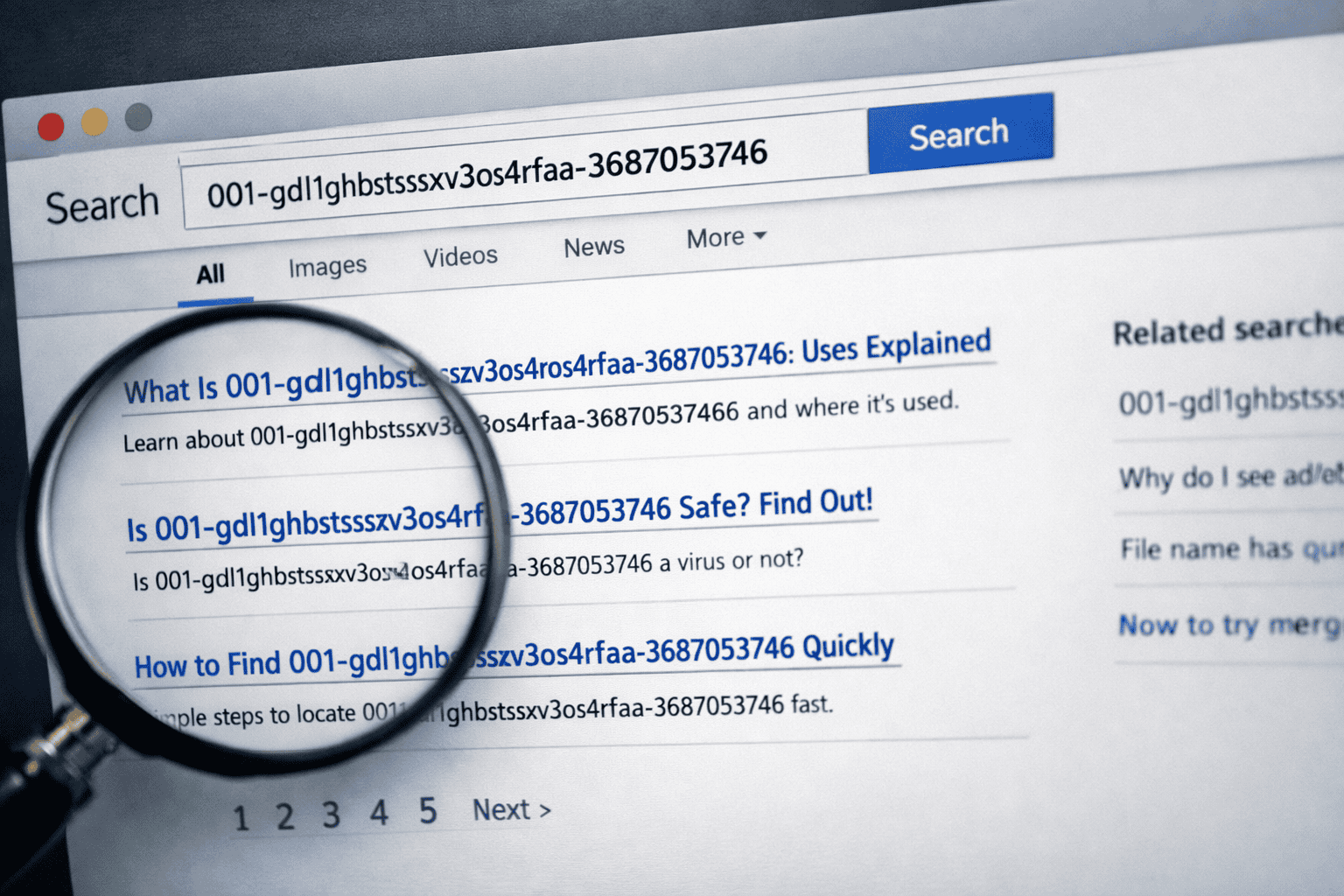
Many people search for a string like this because they worry it’s a virus, a scam, or something “hidden.” The truth is more boring in most cases: the string gets copied into places where it doesn’t belong. It might appear in search results because someone posted it in a forum question, in a public report, or inside a file listing that got indexed. Another reason is that automated systems sometimes generate public pages that include IDs. When search engines crawl those pages, the ID becomes searchable. So if you typed it into Google and found little or inconsistent information, that doesn’t automatically mean it’s dangerous—it often means it’s just not meant to be read by humans.
How to Figure Out What It Is Using Context
The best way to understand this identifier is to look at the context around it. Ask yourself: where did you see it? Was it inside a file name, a folder, an email attachment, a website, or an app? If it was in a download, check the file type and where it came from. If it was in a URL, look at the domain and the page title. If it appeared in an error message, read the full message and note the application name. Identifiers like this are usually only meaningful inside the system that created them. Without context, it’s like finding a barcode number with no product label attached.
Practical Steps to Handle It Safely (One-Time Checklist)
If you don’t know what it is, here are safe steps that work in most situations:
-
Check where you found it and write down the source
-
Look at the file type or surrounding text for clues
-
Scan any downloaded file with trusted security tools
-
Avoid running unknown files if you didn’t expect them
-
If it came from a platform, check your recent activity there
-
Search inside the same platform for that ID, if it has a search bar
-
Ask the sender or site support what the identifier refers to
-
Keep a copy of the full message or page for later reference
When It Could Be a Red Flag
Most identifiers are harmless, but you should stay cautious in a few situations. If the string appears in a message that pressures you to act fast, download something, or enter personal information, treat it as suspicious. If it’s attached to an unknown file type, especially one that asks you to enable macros or grant permissions, don’t open it. If your device suddenly shows pop-ups or your browser redirects after interacting with a page containing the string, step back and run a security scan. The identifier itself may not be harmful, but it can be used in a scam as a “ticket number” or fake tracking code to make something look official.
If It’s a File Name: What You Can Do Next
When an identifier becomes a file name, it usually means the original name was lost or replaced during export, upload, or conversion. Start by checking the extension: PDF, ZIP, MP4, CSV, or DOCX can give you instant clues. Open safe formats like PDF in a viewer, not a full editor, if you’re unsure. If it’s a ZIP, inspect the contents without running anything. If it’s a document from a platform you trust, try re-downloading it from the original place; often the proper file name will appear there. If you received it from someone else, ask them what it is supposed to be and why the name looks like an internal label.
If It’s in a URL or Page: What It Usually Means
When you see an identifier inside a website address, it often means the site stores content by ID. Many systems do this because it’s faster and more consistent than relying on readable titles. For example, a blog post may have a readable slug, but the backend still stores an internal ID. Some sites put the ID directly in the URL. In other cases, the ID might refer to a download token, temporary access key, or a content record. If the page is part of a trusted platform you recognize, the ID is usually normal. If the site looks suspicious or is filled with ads and pop-ups, don’t interact with it just because the ID looks “technical.”
Can You “Decode” It and Get a Clear Meaning?
In most cases, you can’t decode it into a human sentence. Systems don’t design these identifiers for readability, and many of them don’t contain plain meaning. Some IDs include hints—like a prefix for a service or a version number—but the rest may be generated to avoid duplicates. Even if you guess that “001” means “first,” you still can’t know what the middle or ending numbers represent without access to the system that created it. The most accurate approach is not decoding, but identifying the source. Once you know the platform or app that produced it, the ID can often be searched within that platform’s settings, logs, or support tools.
How to Explain It in Simple Words to Others
If you need to describe it to a teammate, a client, or support staff, keep it simple: it’s an internal ID. You can say, “I found this identifier and I’m trying to confirm what item it refers to.” Then include the exact string, where you saw it, the date and time, and any screenshots or messages around it. This helps support teams or technical staff locate the right record quickly. Also, if you’re posting about it online, consider removing private context like full URLs, email addresses, or account details, because the ID might be linked to an internal item even if it looks meaningless.
Final Thoughts / Conclusion
001-gdl1ghbstssxzv3os4rfaa-3687053746 is best understood as a system-generated identifier, not a normal word or public name. It can show up in file names, URLs, logs, exports, or app storage, usually because a platform needs a unique label to keep track of something. The most useful way to handle it is to focus on where you found it, what it’s connected to, and whether you trust the source. When you use that context, the string becomes much less mysterious—and you can take safe, practical steps to identify it, explain it, or ignore it when it’s simply a harmless internal label.
Frequently Asked Questions (FAQs)
People ask about 001-gdl1ghbstssxzv3os4rfaa-3687053746 because it looks unusual. Here are clear answers to common questions.
Is 001-gdl1ghbstssxzv3os4rfaa-3687053746 a virus or malware?
Not by itself. A string like this is usually just an identifier. What matters is where you found it and what it is attached to. If it’s the name of a file from an unknown source, the file could be unsafe, but the identifier alone is not proof of anything. The safest move is to scan the file, avoid opening unknown file types, and confirm the source.
Why does 001-gdl1ghbstssxzv3os4rfaa-3687053746 look random?
It looks random because it’s made for computers, not people. Many systems generate unique labels automatically so two items never collide. The “random” look helps prevent guessing and reduces errors. It’s similar to how tracking numbers or order IDs can look strange without the company name attached.
Where did 001-gdl1ghbstssxzv3os4rfaa-3687053746 likely come from?
It usually comes from a platform, app, website, or storage system that assigns IDs to files, pages, exports, or background tasks. If you saw it in a download, it could be an export name. If you saw it in a URL, it may be a page or file record. The most reliable clue is the surrounding context, like the app name or the website domain.
Can I search 001-gdl1ghbstssxzv3os4rfaa-3687053746 inside a platform?
Yes, sometimes. If the platform has a search bar that supports IDs, you may be able to paste it and find the related file or record. This works better in tools like dashboards, cloud storage panels, or admin areas. If searching doesn’t work, contacting support with the ID and context often helps more.
Does the number 3687053746 at the end mean a date or timestamp?
It might, but you shouldn’t assume it does. Some systems end IDs with counters, database IDs, or time-based values. Other systems use numbers that only make sense internally. Unless you know the system that created it, it’s safer to treat the ending number as part of a unique label rather than a readable date.
What should I do if this ID appears in an email attachment name?
Start with caution. Check the sender, and confirm you were expecting the attachment. Look at the file type and scan it. If it’s a common safe format like PDF, open it in a viewer. If it’s an executable file or a document asking you to enable macros, don’t open it. When in doubt, ask the sender what it is and request the file again with a clear name.
Can I rename a file called 001-gdl1ghbstssxzv3os4rfaa-3687053746?
Yes, in most cases you can rename it, but keep the file extension the same so it still opens correctly. Renaming only changes what you see; it doesn’t change the file’s contents. If the file is tied to a system that expects the original name, keep a copy of the original name somewhere before changing it.
Why do people pair these IDs with other names or topics online?
Because they’re often found without explanation. Someone sees the ID in a download, log, or webpage and posts it while asking for help. Over time, search results can mix the ID with unrelated discussions. This creates confusion, especially when the same ID format appears across different platforms. Context is the only reliable way to avoid wrong conclusions.
ALSO READ THIS : What Is 607 UNC Age? Simple Guide for Unk Fans


Best Movirz Alternatives for Streaming Movies Online

Who Is Erin Trussell? Full Details About Duncan Trussell’s Wife and Personal Life

What Is Twizchat and How Does It Work for Users Today

What Is SosoActive and How Does It Work for Users

How to Identify 2RSB9053 Parts and Their Key Features

What Is Caricatronchi and How Does It Work Today

What SocialWick offers for safe social media growth

What Is Cumhuritey and How It Works Around the World

What Is Hormita and How It Is Used Around the World

How Pappedeckel Helps in Packaging and Daily Use

Galoble

MMSVEE24 Explained in Simple Terms for Beginners

HeilxStudio
What SocialWick offers for safe social media growth
Best Movirz Alternatives for Streaming Movies Online
How Pappedeckel Helps in Packaging and Daily Use
Who Is Erin Trussell? Full Details About Duncan Trussell’s Wife and Personal Life
What Is Cumhuritey and How It Works Around the World
How to Identify 2RSB9053 Parts and Their Key Features
What Is Twizchat and How Does It Work for Users Today
Best Movirz Alternatives for Streaming Movies Online
Who Is Erin Trussell? Full Details About Duncan Trussell’s Wife and Personal Life
What Is Twizchat and How Does It Work for Users Today
What Is SosoActive and How Does It Work for Users
How to Identify 2RSB9053 Parts and Their Key Features
What Is Caricatronchi and How Does It Work Today
What SocialWick offers for safe social media growth
What Is Cumhuritey and How It Works Around the World
What Is Hormita and How It Is Used Around the World
How Pappedeckel Helps in Packaging and Daily Use
-

 Celebrity3 months ago
Who Is Lauren Deleo? What to Know About Jake Lacy’s Wife
-

 Celebrity4 months ago
Who Is Debra Peifer? The Untold Story Behind Zach Bryan’s Rising Fame
-
 Blog4 months ago
What Is cilkizmiz24? Explained Clearly: Meaning, Use, and Notes
-

 Celebrity3 months ago
Who Is Petra Exton? A Clear Look at Joe Wilkinson’s wife